Buy Outboard Motors Trusted Source
Buy with assurance by choosing an authorized Canadian outboard dealer that validates certification, factory backing, and proven track record. Verify OEM parts availability in stock, manufacturer-certified technicians, proper service documentation and inspection, and verified serial number warranty. Request on-water demos with RPM targets, correct shaft and prop configuration, and written quotes breaking down engine, rigging, installation, and costs. Check parts accessibility and warranty repair completion period throughout Canada. Avoid grey‑market imports and ensure proper horsepower ratings for your hull. Continuing on, you'll understand how to assess different makes, funding choices, and seasonal deals.
Main Insights
- Confirm authorization from manufacturers and licensing in Canada, as well as business tenure; ensure manufacturer-trained and certified professionals and coast-to-coast OEM parts support.
- Obtain an official warranty connected to the engine serial number, plus confirmation of dealer status and a complete pre-delivery inspection documentation with software updates and water testing results.
- Review reviews from Canadian customers for delivery timeliness, client correspondence, quality of after-sales support, and how they handle warranty claims.
- Request comprehensive quotes itemizing every cost from engine and rigging to installation, PDI, documentation, taxes, and associated fees; take care to prevent purchasing unauthorized imports that lack proper Canadian warranty coverage.
- Confirm appropriate sizing and installation: align motor power and shaft dimensions with vessel, verify propeller selection, and check operational RPM and responsiveness with normal cargo.
How to Evaluate Reputable Outboard Dealers in Canada
Even though pricing might be attractive, start by validating the vendor's reliability and qualifications. Confirm licensing credentials, official brand approval, and length of business operations. Review feedback from buyers in Canada to ensure consistent customer satisfaction, timely shipping, and open dialogue. Ask for detailed maintenance history for display units and demos; reputable vendors maintain records of upkeep activities, firmware updates, and warranty service.
Check inventory levels to avoid being stuck waiting during peak season. A reliable dealer provides accurate ETAs, documented quotes, and detailed allocations. Compare return terms and exchange periods in writing, covering restocking fees and freight coverage. Assess spare parts availability, qualified service staff, and service durations for warranty repairs. Require detailed pre-delivery inspections, serial-numbered invoices, and documented guarantees. Select the dealer who proves reliability at every stage of the sale.
How to Pair Engine Specifications with Your Boating Preferences
After evaluating the dealer, make sure to select a motor that suits how and where you'll be boating in Canada. Begin by considering your hull specifications, capacity plate, and typical load. When regular trailering or remote lake access is needed, focus on compact 2.5-9.9 hp four-strokes for better mobility. For peaceful cottage lake cruising, opt for midrange 25-60 hp EFI four-strokes including sound-dampening and user-friendly trolling idle control. If you're tackling rivers or large lakes with companions and equipment, upgrade to 75-150 hp for rapid acceleration and hold consistent velocity in choppy conditions.
Choose the correct shaft length according to the transom height (offered in short, long, or extra-long) and select the proper gear ratio and prop pitch factoring in your weight and altitude. Make sure to evaluate important elements like electric start, power trim/tilt, and your alternator output to ensure sufficient power for electronics without unnecessary idling.
Comparing Major Companies for Dependability, Energy Efficiency, and Protection
You should analyze every brand's track record and performance data-covering reliability scores, maintenance needs, and owner feedback-to determine the best option. Next review warranty terms and coverage scope side by side to understand who offers complete protection for materials, repairs, and anti-corrosion measures. With solid data on performance and warranty protection, you'll select a motor that minimizes downtime and ownership expenses.
Confirmed Performance Metrics
When reliability is non‑negotiable, performance data differentiates Canada's top outboard brands. You should weigh operational longevity data, reliability metrics, and cold condition startup rates. Look for engines that deliver consistent performance under stress, notably in the cold environments found on northern waterways. Exact fuel injection technology is essential: uniform fuel dispersion enhances burning efficiency, minimizes deposits, and ensures reliable operation during all operating conditions.
Examine anti-corrosion properties with certified salt‑spray results and review gearcase seal integrity after extended duty cycles. Vibration and noise baselines at operating speed reveal assembly precision and positioning. Documented service history indicate how regularly components and systems demand servicing. Lastly, verify parts availability and diagnostic transparency-manufacturers providing diagnostic data and testing protocols make upkeep predictable, protecting your time on the water.
Comparing Warranty Lengths
While performance metrics are important, warranty duration demonstrates how confidently each company supports its engineering. When assessing warranty terms, examine more than just the years. Check protection tiers for mechanical parts, anti-corrosion, electronic systems, and workmanship. Some brands offer five-year comprehensive coverage with anti-corrosion protection, while others split the warranty-three years comprehensive with partial components coverage thereafter.
Examine warranty claim processes, as well. It's important to have authorized dealers across the country, quick diagnostics, and easy-to-obtain parts across Canada's inland and coastal areas. Well-defined maintenance guidelines are important; neglected maintenance might invalidate protection. Ask whether commercial or rental usage affects coverage terms, and if warranty transferability improves resale value.
Lastly, match warranty coverage to hours of operation. Heavy-use fishermen may benefit from premium protection packages, while occasional boaters gain peace of mind with basic comprehensive coverage.
Authorized Service, Certification, and Dealer Network Information
Before examining engine strength or boat fit, ensure you prioritize certification, dealer networks, and authorized service to protect your investment and warranty. You need a motor backed by factory-trained, certified technicians and a coast-to-coast Canadian dealer network that stocks OEM parts and adheres to brand service protocols. Be sure to confirm the dealer's status with the manufacturer and request written warranty documentation connected to the engine serial number.
Choose manufacturers with uniform diagnostic systems, digital service documentation, and well-defined maintenance schedules allowing you to receive maintenance at any location without losing coverage. Ask about pre-sale inspection procedures, software upgrades, and after-installation sea-trial processes. Assess parts supply, turnaround times, and mobile service at distant locations. When you purchase through an certified retailer, you ensure proper setup, verifiable maintenance history, and quicker resolutions if problems occur.
Financing Solutions, Pricing Clarity, and Seasonal Offers
Once you have authorization secured, turn your attention to what you'll really pay and how. Obtain itemized pricing from dealers that separate the motor's retail price, rigging, controls, prop, setup costs, PDI, shipping, and documentation. Double-check all fees and taxes up front. Detailed pricing helps you to compare different models by power output, features, and warranty protection without any surprises at delivery.
To preserve your available funds, explore flexible financing options through factory programs and dealer networks. Search for attractive financing rates, transparent terms, and no early payoff penalties; check if extended warranties can be included in the payment plan. Time your buying decision during special sales events and manufacturer offers-cash back, store credit, or bundled accessories often emerge toward the end of winter season. Book your selection in advance, then secure the discount with formal paperwork including deposit terms and delivery timeline.
Essential Guidelines and Purchasing Advice for Canadian Waters
Safeguard your purchase by steering clear of grey‑market imports that are missing Canadian warranty protection and proper documentation. Make certain to match horsepower to your hull's specifications and standard load to get reliable performance without overstressing the transom. We'll show you how to verify authorized suppliers and pick the optimal power rating for Canadian waters.
Steer Clear of Grey-Market Products
Although discount prices may look attractive, unofficial outboard engines frequently prove more expensive over time. Unauthorized imports often bypass Canadian certification, emissions standards, and dealer preparation, causing issues with compatibility with domestic fuel standards, mounting systems, and diagnostic tools. Warranty protection may be compromised because manufacturers generally provide coverage exclusively via official Canadian channels. Spare parts can be difficult to obtain, firmware upgrades may be unavailable, and product recall assistance is uncertain.
Secure your purchase by checking the product's Canadian SKU, serial number, and manufacturing year with an certified dealer. Request a printed manufacturer warranty, PDI checklist, and proof of Canadian compliance labels. Confirm that the ECU is programmed for Canada and that maintenance records starts at a qualified dealer. When in doubt, walk away and obtain through the official network.
Align Power with Hull
Before selecting horsepower, match the engine to your vessel's hull parameters including mass, hull angle, and planned cargo for efficient planing and safe handling. Always review the boat maker's recommendations and stay within the specified parameters; underpowering leads to slow takeoff, while overpowering puts stress on the transom and nullifies guarantees. In Canadian water conditions, engine torque matters as much as peak velocity.
Verify proper shaft length for transom height to maintain the anti-ventilation plate aligned with the boat's keel. A mismatch can lead to cavitation, spray, and steering issues. Select the right propeller parameters-pitch and diameter matched to achieve proper RPM under standard load conditions. Perform testing with standard fuel, crew complement, and equipment. Opt for four-stroke EFI motors with anti-corrosion features, and demand complete sea-testing with proper rigging documentation.
Popular Questions
How Provincial Taxes and Fees Influence Outboard Motor Price Tags?
Provincial taxes and fees impact your final outboard motor price by including tax obligations and eco-fees to the base MSRP. You'll need to pay applicable provincial and federal taxes, plus additional charges for documentation, recycling, and component disposal. Some regions apply additional fees for high-end accessories and waste management. It's recommended to ask for an detailed breakdown, verify that destination and PDI charges aren't duplicated, and investigate available rebate options to optimize your overall investment with complete transparency.
What Documentation Is Required to Register a New Outboard in Canada?
Much like organizing a toolbox, certain paperwork is required when registering a new outboard in Canada. You'll need to provide evidence of purchase (including sales documentation), government-issued ID, outboard motor serial number, and manufacturer documentation. For title registration, submit watercraft specifications and proof of Canadian address. If the purchase is financed, attach lien documentation. Submit the provincial/Transport Canada application, sign all required fields, and keep electronic records. This will streamline approvals, preserve future worth, and ensure compliance from day one.
Can I Transfer the Warranty When Selling My Boat or Motor?
You can usually transfer the warranty on your boat or motor, but it's dependent on the specific manufacturer and how it's registered. To confirm the warranty can be transferred, get in touch with the dealer or manufacturer prior to sale, check for any applicable fees, and complete the necessary paperwork. You'll need to provide ownership papers, original sales receipt, serial numbers, and maintenance documentation. Be sure to register the new ownership within the required period to ensure uninterrupted coverage. Maintain detailed service records to preserve warranty coverage and market value.
What's the Performance of Outboards in Cold Winter Starts?
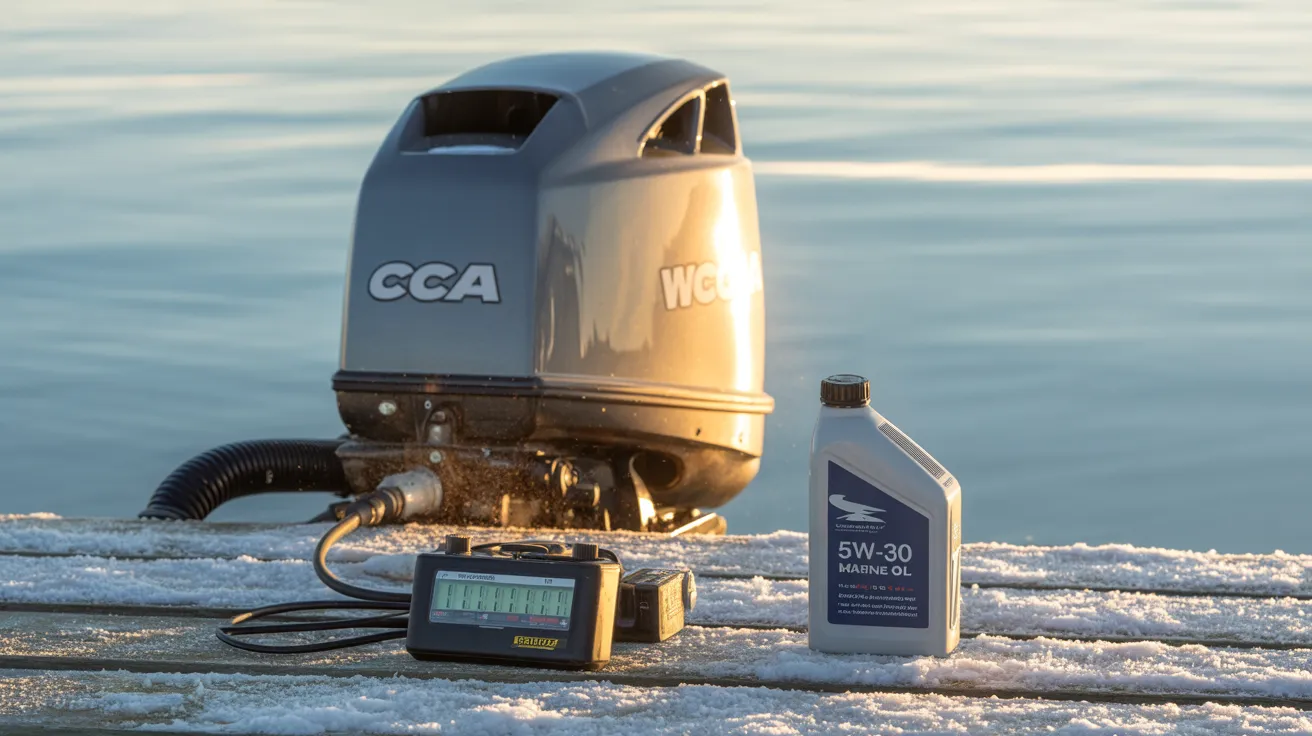
You'll get reliable starts when you follow proper preparation. For cold weather operation, you'll need EFI or a properly adjusted choke, a strong battery, and clean fuel. Maximize battery performance by maintaining tight terminal connections, selecting the appropriate cold cranking amps, and protecting the battery from extreme cold. Pump the primer, engage the key to prime the system, then start in brief intervals. Use fresh winter-grade fuel, a 10W-30 get more info or 5W-30 marine oil, and let it warm up at idle before applying throttle.
Are There Insurance Implications for Specific Horsepower or Modifications?
Insurance companies often assess policy rates and qualification according to boat alterations and HP. When you go beyond policy coverage thresholds or make performance upgrades, you'll have to get modification coverage riders for full coverage. Be sure to disclose precise engine power, computer modifications, propeller changes, or lift plate additions. Insurance providers may request inspections, photos, and receipts, then update deductibles or navigation restrictions. To maintain warranties and claims, keep records of modifications, follow manufacturer guidelines, and update your policy before initial testing or boat sale.
Final Thoughts
With your guide in hand, first vetting dealers, pairing horsepower to your waters, and evaluating brands for dependability. Be sure to insist on certified service, secure transparent pricing, check financing options, and align purchases with Canadian seasonal deals. Avoid gray-market engines and ambiguous warranty terms. Follow these steps, and your new outboard will perform flawlessly - comparable to a Swiss watch with Bluetooth. Once prepared, request written quotes, validate serial registration, and arrange your first service. Follow this approach, and you'll start with assurance and enduring worth.